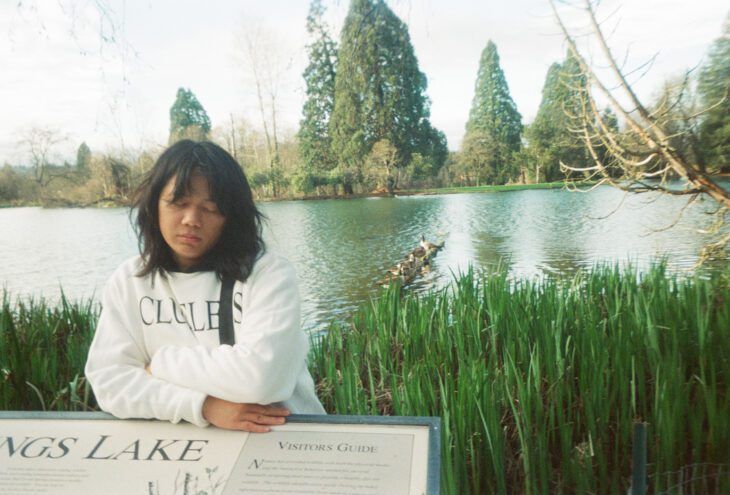
The Bay Area’s own Tomu DJ is my friend, and we’ve made music together, and done DJ events together, and she’s been covered on this blog before…and there’s an unwritten music journalism rule that you’re not supposed to cover artists multiple times within a certain timeframe, or that you’re not supposed to cover your friends. But fuck that, this is my blog and I will do whatever I think is ethically OK.
She blows my mind with music all the time, and her recent run has been amazing – The Antagonist piano album, a total change of pace from her usual beats-focused work, is really sprawling and lush and actually brought me to tears.
And then Bottom Of The Sky came out, an Iran protest album which she apparently made in a day, and it was super focused and kind of shocked me into a mindstate where so-called “incalculable loss” was actually graspable. The music gave me space to sit and consider bombing, killing, children dying…to me it was a very sober listen, a very powerful listen.
When Samuel Alexander emailed me all the way from Slovakia and asked to interview Tomu, I thought well that’s great because this new music is important, and it’s almost better for me to be able to pass the mic and have someone else do the interview right now. So that’s what we did.
I told Samuel to focus on Bottom Of The Sky because I think it’s so important for us now, as humans of the world, to not necessarily look directly at the most gruesome images of what’s going on with geopolitics and war, but definitely not to ignore the context we are living in, and to give ourselves a chance to grieve, process, think, and feel, regarding stuff that for some of us, it’s easier to keep in the back of our minds. Tomu, in this phase of her music, is really clearing some space for us to bring it to the forefront, to pause and reflect on the exact moment we’re living through. It’s one of many reasons I think she is such a crucial artist, because of how necessary that is right now and always.
Here’s Samuel Alexander talking to Tomu DJ. Thank you Samuel, thank you Tomu.
This interview has been edited for clarity.
-Andrew
I’ve been following Tomu DJ for the majority of the 2020s, since coming across Ambient 2 at the height of the pandemic. What began as an intriguing electronic album quickly developed into an appreciation for a musician with an oeuvre equally indebted to ambient music, as it is to footwork culture. Depending on the release, you’ll feel like you either stumbled upon a club mix or a Hiroshi Yoshimura tribute.
March 2026 has been an especially productive month for Tomu, as she dropped three projects, including the uptempo Sacramento EP, and her ambient full-length antagonist, followed up only a day later with Bottom Of The Sky, a protest album “about Iran, as well as a reflection on the pervasiveness of Zionist imperialist ideology and its ramifications on Western culture.”
With such an impressive range, her greatest skill is saying a lot without uttering a word. The open compositions play with the listener, encouraging them to interpret their own feelings. Hourglass, the opening song, features a prominent synth that, like an alarm, sounds without ceasing for the song’s runtime. It is a minimalist work, an almost genre-less lesson in restraint, and an album on which ambient footwork flirts with dub techno, resulting in a sense of melancholy and pensiveness.
Tomu DJ and I spoke about Bottom Of The Sky, her feelings, and the way she articulates herself through instrumental music.
-Samuel Alexander
So, first of all, I would like to ask, how did the project even come about? Because you dropped it very close after your album.
The way I started producing, or when I started to share my music more, something I always liked about it was, I would just drop it when it was done. You know, I'd like come up with some artwork and just drop it right away. And I think that was a great process for me for a while. I was just finishing things as they were done, and eventually my music kind of started getting more noticed. But the flip side of that was, I signed to this distributor and publishing and all this crap and like, then it's like for every major release, like with Feminista and afterwards, anything that went onto streaming, I have to have it done 30 days before. Ideally 90 days before. It's just really contrary to the way that I work, which is very improvisational, very much living with the ideas that are in the moment. For example, the piano record that dropped a day before the Iran protest album, that had been in progress for for a long time, it was a regular record, like with a label and stuff, where it's actually getting produced and stuff like that. And then iby the time that that drops, I just have so much pent up energy from everything I've been doing while I've been waiting for it to drop, I have other projects already ready to go. There's a few buckets living in my Dropbox account that just have like a ton of songs in them, where stuff that doesn't make it directly onto the projects will go into there. And sometimes I'm living with these songs for a few years before they make sense to me.
When it comes to this recent album, I think what’s going on around the world is terrible right now. There’s this really devastating news cycle that's going on all the time and it sometimes feels like, the more I know the less I know. Of course there are a lot of fundraisers and initiatives within the arts to fundraise for certain things. But I saw my role as as an artist in all of this as doing what I usually do, which is creating music that is mostly instrumental, very reflective, and allows space for processing. I listen to my own music while I'm thinking through stuff. Especially just being American and being from here, everything that's been going on, in Iran, around the world, domestically, in the last decade since, uh, the guy was elected, things have definitely taken on a different flavor. My life immediately changed the moment that Trump was elected. I was like 20 or something, and I immediately became like nihilistic as fuck. I don't mean that in a bad way, but I lost all faith and hope in systems that I thought were set up to protect me. I lived life as a transgender person, too, while Trump was coming up, and then all this stuff with trans people in the media, it felt eventually perverse for me to be making commercial music the way that I've been doing without stopping to question, what am I doing as an artist? What is my work really saying? It's not saying anything because it's instrumental music, but what concepts am I actually applying here? When you listen to Bottom Of The Sky, it's pretty self-explanatory. It's very much arpeggiated melancholic, a mixture of of more techno-y and more ambient orchestral sounds. But mostly it’s a very boring album. There's not a lot of bells and whistles. It's like each track is probably one or two, you know, sometimes it's one element. Like the first track, I don't even know what I did that with, but it sounds like just one synth preset or something. It’s very simple. You hear these like sort of comforting chords, but there's no pop music appeal. You're going to listen to the looping melody for like five minutes and you're going to think about what you did.
I feel like most of your music is very self-reflective and open. When you're doing a protest album, is the process of articulating yourself different?
Yeah, I'm going into this specific concept. With all of my albums, it feels like I'm trying to express something different, but as far as the major albums that come out, like, you know, Antagonist, Feminista, Half Moon Bay, there's always like some element of like, okay, everybody's going to see this, and is going to judge me based on it. It’s going to have my face on it, and it's gonna go all over the world. Like anyone will be able to listen to this, and it's a very daunting prospect because, the exposure, just all the kind of interpretations you open yourself up to when you're like putting yourself out in that way, it's still not something I'm fully comfortable with. Partially as a result of that, I've kind of begun to engage with concepts in a different way that I feel like removes myself from the process a little bit. When you hear one of these main albums that I've produced, what you're also hearing is a conversation, emails between me and the label, other factors that I had to consider, the months it took me to sign this publishing deal, or do all this distribution. It's like a bunch of shit that feels very much not relevant to what I do music for, what I do art for, why it's so important for me to express myself. This Iran protest album, I made it in a day. I told my friends, I'm going to make this Iran protest album to express how I'm feeling about what's going on, and then later in the day, I uploaded it.
You mentioned that you were doing the album based on how you feel. What is the main feeling that was like pushing you to make this? Is it anger? Sadness? How would you describe like the feeling that was pushing the creative process?
I would say largely it was over overwhelmed. I have said fuck Trump like so many times and it's not doing it for me anymore. It only gets worse. No matter how many fundraisers we do, it's like it's only getting worse. Going to panels or talks or things like that, or doing research, online or in history books, that can do a lot. And I think that's not my job to convey (information that can be gained that way) to people, because there's going to be people who are experts on what’s going on in Iran. Why? Why are we bombing them? I would hate for people to be asking me about things like this, because I'm not qualified. So for me, (the album) is moreso a documentation of, what is it feeling like to be here in America right now, living a normal American life while this is going on? It's not even necessarily guilt, because I could be born anywhere. My government could be doing fucked up shit. It's not my fault. But reckoning with being an American musician, and gigging around here and trying to get money with my music and stuff, eventually, you know…. Especially when you think about all this stuff that's coming out about Spotify and Boiler Room and all these companies who are doing this shit…. It's like, what am I even contributing to? Like if I'm trying to get myself onto the circuit, or tour around, release through labels and stuff…. What exactly is that doing? I had, and I'm still there, this professional crisis. I study and engage in other things in my life that reflect my values a lot more than being a musician. I'm trying to develop a new practice for myself within the arts, where I'm distancing myself from the algorithm, the label, the system, like what are they willing to platform? I got so caught up in this mindset that in order to just get some passive income, as an experiment, I thought what if I took everything I knew and made the most bullshit song that I possibly could? I'm a weird person. So I don't understand society that much. But if I appled my sort of most adept understanding of what a normal person would like, and made that into a song, and uploaded it to my next album just to make money, like what would happen? And I still get hundreds of dollars a month from that song, from streaming income, because it sounds so generic. I think it has like a million streams. And it's not even one of my favorite songs of mine. So it's kind of like, you know, I've proven to myself that, okay, if I really did apply myself to making music for money, that could be something that I do. But after my last major album in 2024, I Want To Be, I got really burnt out and exhausted from making music with other people in mind, that I started focusing more on collab projects with my friends, like the MTP album, things like that. I have so much music right now that is almost done, kind of more like my main albums sounds, with more like, you know, electronic kind of club and hip-hop influenced sounds, but I don't even want to release those until I know what I'm doing, like where I'm trying to go with music, what kind of message I'm trying to put forward. Because it's like another thing, right? It's like, when you asked me, like, can I interview you about the process of the evolution of your sound or the new protest album, I'm like, yeah, because I've had interviews where people are asking me what my fucking favorite meme is. They put me in this magazine, and they completely bastardized what I said, because it's like, I'm here in this interview, talking shit that I believe in, and it gets manipulated to sell this…. As far as journalism and articles go, before things became like the way they are now with like, hyper TikTok content, I got in right before that. But when people were writing about me, they meet me and I'm like, hella weird, like compared to what they're expecting. They're expecting me to be this popular DJ who does DJ stuff, but that's not my life at all. It's not the culture that I want to promote or represent. I don't have a TikTok account, I don't make hyperpop music, I don't like design my music to be made around reels. I try pretty hard not to be promoting this culture of, you know, it's hard to describe…because it's still nascent, and we're still seeing what's going on. But one thing we can see for sure is that, we have these platforms like, Instagram, you know, Meta, X, that are literally owned by far right wing, really messed up people. And we are willingly submitting all our content to that. We're willing to let them dictate who is worthy of being spotlit, who is worthy of getting the next piece of candy from the industry. We know who this is being dictated by, it’s people who are warmongers, people who are directly giving their money to organizations like ICE.
How do you navigate the dynamic of, on one hand, you're on the streaming because as a musician, you kind of have to be. But on the other hand, like, I feel like your music even before Bottom Of The Sky was like very politically engaged on the opposite side, very left leaning, and the platforms are very much not. How do you strike a balance?
That's a really good question. I don't make peace with it. I’m at war with it. It's all the same kind of machine to me. You know, the industry is like, whether I'm having to email this guy or that guy, I'm viewing it as bullshit that I have to do that has nothing to do with my art. That sort of goes back to what I was saying about these sorts of negotiations. There's a part of myself that has to be hidden. For a lot of people, they're not even going to know that my music is left leaning at all. And it's intentionally designed that way. You know, it's a Trojan horse where you see this thing, it looks very like, oh, these pictures in nature. It's very like, not innocent, but, you know, doesn't look immediately to be anything politically oriented. But if you purchase a copy of my recent record, there's an essay that comes along with it, which explains what I'm saying to you now, and other things that went into the process of the album. And I'm experimenting with a lot of things like this. For example, this Iran protest album is not on Spotify. That's also examining the hypocritical nature of protesting things like this through mediums like this. I don't view it as like a super moral act or anything, it’s more exploratory.
Is the listener on your mind when you're making the music or putting it out?
Putting it out, definitely. Making it, there's other people in the room. So there’s kind of already a listener in mind. And usually how the music comes out depends on who is there, with the nature of our relationship being reflected in the music. But yeah, I definitely do think about that, and that kind of varies depending on what project it is. In the sense of drawing people in, I try to create music that is very approachable. That's why it can be frustrating for me being pigeonholed into house and techno and things like this, because I have always operated on the principle that my music is made to reach as as many different kinds of people as possible. Like not people by volume, because that would require advertising a lot more than I do. But I want my music to be understandable by a three year old or a 93 year old. I try to keep the concepts rooted in sound and how it makes people feel and keep it approachable there. Then there's more explicit political stuff like the Iran protest album. But there's also a lot of messaging throughout the music, either expressed through sound or song titles, and the idea there, in part, is to cultivate this audience and this musical ecosystem that's very open, receptive, warm and welcoming. You might get it or you might not. With the stuff on streaming, it could really go either way. You know, it's like if you put this on at work and, like negotiate ICE contracts with it, it's like the music still accomplished its purpose. It was still music that was listenable. That's part of the political context, too,. Even this sort of music that's like very approachable, people will say the sound is like, oh, it's euphoric. It's transcendent. But what do those things actually mean? Why is this music approachable? Because there are songs that I've been paid thousands of dollars for where people are like, oh, my God, this is so amazing. And literally all I did was follow a YouTube tutorial on how to make reggaeton and threw in a loop from Splice and made a song in ten minutes. And then all of a sudden it's like, oh, my God, this song is so beautiful and transcendent. It was weird to me because I would spend so many months expressing myself, making all the intricacies of these complex tracks. And then it's like, oh, I can actually make songs in ten minutes that's viewed as like, oh, my God, this is so beautiful. And really what I'm doing is I'm loading a patch from a VST. I'm playing chords that I learned how to play on the piano when I was seven. And I'm adding a reggaeton drum loop over it. And that can be, you know, getting reviewed in Pitchfork and getting brand deals and stuff. After having experiences like that, the audience is always on my mind in a way. Sometimes there are flow states where I'm playing the piano. The Antagonist album captures a lot of those. I really never thought anyone would press that onto a record. That was pretty random. That’s a side of my music that people on streaming have not gotten to see before.
Maybe a bit of a heavy question, but with Bottom Of The Sky, what do you hope to accomplish through a protest album?
I think it's already a success. Because I’m not optimistic enough to believe this is going to make a huge change in the world. The price, as you might have noticed, was $20. And that's not because I want to make a bunch of money off of it. People have this idea that's like, you know, content is supposed to be really fast and free and like your music sucks unless it’s good and like a thirty second Instagram clip or whatever. And it's like there's none of that here. If you want to engage with this piece of music, it's twenty dollars. I'm not explaining what it means, except for the fact that this is a Protest album. It's about the war in Iran. It's about, you know, Zionist ideology and Western culture. And you can listen to it. You paid twenty dollars, so you might as well. You can listen to it, think about it. And what does it mean to you? Did it make you think anything? Maybe you had similar thoughts that I did when I was making it. Maybe it convinced you to look up more about the conflict. Maybe you said this was stupid and had nothing to do with what it said it was about. I'm going to make my own Iran protest album. That's like, even more of a success in that way. Yes, it’s technically public on the Internet, but it's sort of set up in this way where this is not for everybody. It’s set up for most people to ignore unless you care. And then if I made somebody care, which at least three or four people did, then that's a success for me. Aside from that, I've had other people told me they just streamed it off the website. And that's nice, too. The notion of success is something I interrogate a lot because, I've gotten brand deals, millions of streams, articles and, you know, whatever fucking website. And I honestly don't care about that shit anymore. If I got more of it, it wouldn't feel more successful to me. It feels like whatever I may have thought would be success in music before I sort of got it, doesn't really matter to me. So if I can push my own boundaries of what I'm doing and cause even one person to think or go about their day in a different way, that’s what's more of a success to me. As far making peace with the music industry, I'm not trying to do that. I'm exploring other avenues in my life to get more stability through other means and not have to rely on music. So that is also freeing in a sense, because now it's like, OK, what the fuck do I really want to do here? And this protest album is one sort of drop in the bucket there. But this year, I'm really trying to say goodbye to all that shit. If I submit an album and forget to tell my publisher about it, it's like I don't fucking care. Like, we're all going to die. It's like the music is not that big of a deal. You know, if it can make people happy, if it can make people think about something, that's great to me. A lot of this is trying to reclaim my narrative and get back on my path of making music that is about things that I care about and expressing them in the way that I know how. It's not going to always give you all the answers because I don't have them. It's more meant to encourage exploration, which could be about a certain topic, or how is this music making you feel? What's coming up for you and things like that?
What inspired the title Bottom Of The Sky?
That's just another word for the earth. I think that's where we all are, we're all under the same sky.
That's all of my questions. Thank you so much for your time. If you have any closing statement you want to get out there, please go ahead.
I feel like I said it all. We'll just let the music speak for itself.
Comments
Leave a Comment